Skip to main content Skip to productlist Skip to sidepanel Skip to topbar Skip to search Skip to navigation Skip to footer

Inverters

You can find 15 categories


list view grid view
274 Items

Skip to footer
 of  

Inverters for Photovoltaics: Efficiency, Types, Incentives, and Selection Criteria

With the rapid expansion of photovoltaics, inverters are becoming increasingly important as the central component of every solar system. They are responsible for converting the direct current generated by the solar panels into usable alternating current, which can be used in the household or fed into the public grid. The right choice and sizing of the inverter is crucial for the efficiency, cost-effectiveness, and longevity of your system – whether on a single-family home roof, in a commercial operation, or in off-grid systems.

Below you'll learn what types are available, how to decide between on-grid and off-grid, what funding options exist, why Chinese manufacturers are also a reputable choice, and what you absolutely need to consider when making your selection.

What are inverters?

An inverter is the heart of every photovoltaic system. It is usually installed in the basement, utility room, or – in decentralized systems – directly beneath the solar panels. Its central task is to convert the direct current (DC) supplied by the photovoltaic modules into grid-compliant alternating current (AC). This allows the solar power to be used directly in the household or fed into the public grid. An efficient inverter increases self-consumption, protects against grid fluctuations, and ensures the safety of your system – for example, through automatic shutdown in the event of grid faults.

What types of inverters are there?

  • Single-phase inverter: Typical for small to medium-sized systems up to about 6 kWp, ideal for 230 V household grids.
  • Three-phase inverter: For larger systems from about 6 kWp, it distributes the generated power across all three phases (400 V), reduces grid load, and enables higher feed-in capacities.
  • On-grid (grid-tied) inverter: Only operates in connection with the public grid, feeds directly into it, and controls feed-in power as well as self-consumption optimization.
  • Off-grid (island) inverter: Suitable for off-grid solar systems, independently supplies loads, and charges battery storage as needed, often with integrated charge managers and backup power functions.

On-Grid vs. Off-Grid: Decision Criteria

The choice depends primarily on your grid connection and your self-sufficiency goal. On-grid inverters are more cost-effective and ideal if you want to use the public grid as a buffer for surplus and dark periods. Off-grid systems are more expensive, since they additionally cover battery management and protection functions for island loads, but in return offer complete independence – for example, at vacation homes or remote operations without a grid connection.

What should you look for when purchasing a photovoltaic inverter?

  • Efficiency: Modern photovoltaic inverters operate with a European efficiency of up to 98%, especially in transformerless models.
  • Power range: Depending on the system size, units from 3 kW to over 50 kW are available – the right solution for every application.
  • MPPT technology: Integrated MPP trackers continuously optimize the voltage to always extract the maximum power from the PV system.
  • Monitoring: Many inverters offer remote monitoring in real time via app or online portal.
  • Grid protection: In the event of a power outage, the inverter automatically disconnects from the grid to prevent damage to systems.

Incentives for Inverters

In Germany, inverters are rarely subsidized on their own, but often as part of battery storage incentive programs:

  • KfW Program 275 ("Renewable Energies – Storage"): Up to 30% subsidy on battery storage including hybrid inverter.
  • State-specific programs: Many German states (e.g., North Rhine-Westphalia, Bavaria, Baden-Württemberg) grant additional subsidies for storage systems in which inverters are already integrated.
  • Municipal initiatives: Some cities or municipalities offer bonuses for grid-friendly operating modes (e.g., forecast-based feed-in management).

Why Chinese manufacturers are competitive

Chinese inverter manufacturers (e.g., Huawei, Growatt, GoodWe) benefit from high production volumes, optimized supply chains, and massive R&D investment. Thanks to international certifications (CE, TÜV, UL) and strict quality controls, they often meet European standards. Many models impress with innovative features such as multi-MPPT, high efficiencies (> 98%), and comprehensive monitoring platforms – usually at a very attractive price-performance ratio.

How does an inverter work?

  1. DC input: During the day, the solar panels generate direct current, which is routed to the inverter via cables.
  2. Voltage conversion: High-performance semiconductors (IGBTs or MOSFETs) switch the direct current into a pulsating form in very rapid succession.
  3. Filtering and sine wave shaping: Using an LC filter (inductor/capacitor), the pulsating voltage is converted into a nearly pure sine wave, as is standard in the public grid.
  4. Grid monitoring: The inverter continuously monitors the frequency, voltage, and phase position of the public grid in order to feed in perfectly in sync.
  5. Communication and monitoring: Modern devices provide real-time data on yield, power, and efficiency – via WiFi, Ethernet, or cellular network, as desired.

Overview of inverter types

  • String inverter: For medium to large roofs. Combines multiple module strings, is cost-effective, and easy to maintain.
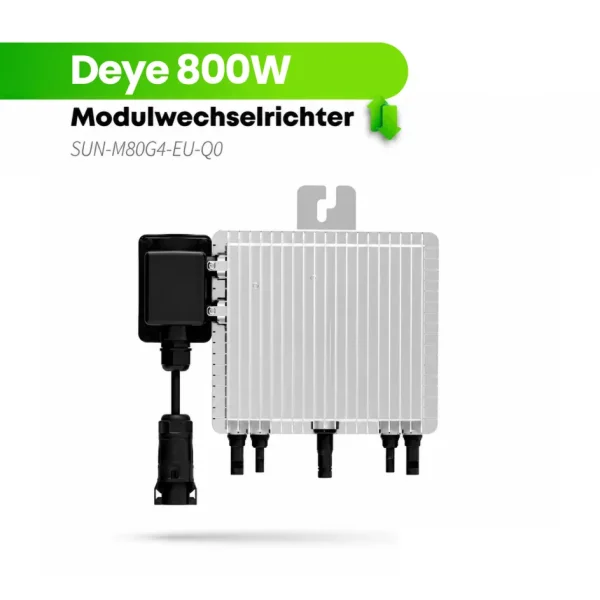
  • Micro inverter: Installed directly under each module. Optimizes individual module performance and minimizes shading losses.
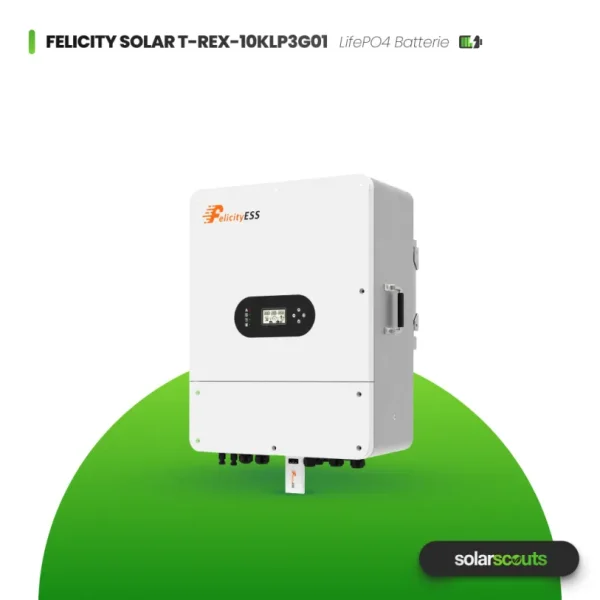
  • Multi-string or hybrid inverter: Combines PV and battery storage management in one device. Ideal for retrofitting with battery storage.
  • Central inverter: Used in large-scale systems (megawatt range). Very high power, robust construction, often redundant units.

Inverters increase cost-effectiveness

By using a high-quality inverter, you increase your self-consumption and minimize feed-in losses. Every self-consumed kilowatt-hour is significantly more valuable than the feed-in tariff: while self-generated power is essentially "free," the average electricity price for household customers in Germany in 2024 was 42.29 cents/kWh, while the feed-in tariff was usually only 8.6 cents/kWh (up to 10 kWp) – a factor of nearly 5 between purchase and sale price. With a powerful inverter, you can sustainably reduce your electricity bill.

Sizing the inverter

  • Power matching: The rated power of the inverter should be roughly between 75% and 125% of the peak PV power.
  • Module string wiring: Pay attention to the permissible minimum and maximum voltage (MPP span) of the inverter.
  • Self-consumption optimization: For hybrid models, it makes sense to configure the self-consumption controller so that it first covers your own demand, then charges the battery storage, and only feeds into the grid afterward.
  • Ambient conditions: Ensure adequate cooling for the inverter (ventilation, shade) to avoid performance losses due to heat.

Buy efficient inverters at Solarscouts

At Solarscouts, you'll find a carefully curated selection of high-quality inverters from leading manufacturers – including renowned brands such as Deye, Huawei, Fronius, Sungrow, and many more. Our range includes everything from compact micro inverters to modern hybrid inverters and powerful string inverters – suitable for every roof, every system size, and every budget.

Our experienced solar experts will personally advise you on technology, installation, commissioning, and optimal system sizing. Whether you're installing a new photovoltaic system or replacing an outdated inverter – we ensure your system operates efficiently, safely, and reliably for years to come.

FAQ

What exactly does an inverter do?

An inverter converts the direct current (DC) generated by solar panels into grid-compatible alternating current (AC). This can either be consumed directly in the household or fed into the public power grid. In addition, the inverter performs protective functions, monitors grid quality, and provides operating data for monitoring.

What are the differences between string and micro inverters?

String inverters combine the output of several solar panels into so-called "strings." They are cost-effective and easy to install, but more sensitive to partial shading.

Micro inverters are attached directly to each individual solar panel and optimize its performance individually. They are ideal for shading issues or complex roof orientations, but more expensive to purchase.

What is the lifespan of an inverter?

The average lifespan is 10 to 20 years, depending on quality, operating conditions, and maintenance. High-quality devices with good cooling and robust design often reach the upper limit.

When is a hybrid inverter worthwhile?

A hybrid inverter makes sense if you:

  • already operate a battery storage system or plan to retrofit one later,
  • want to specifically increase your self-consumption,
  • are planning future energy independence (e.g., with an electric vehicle or heat pump).

It reduces installation effort, saves space, and improves the energy management of your PV system.

How do I choose the right inverter power size?

The rated power of the inverter should correspond to roughly 75% to 125% of the PV peak power (kWp). Also crucial are:

  • the MPP voltage range, matched to the module wiring,
  • power reserves for peak loads,
  • and the planned self-consumption strategy.
Can I upgrade my existing inverter later on?

Yes, in many cases an inverter replacement or upgrade is possible, for example when:

  • retrofitting a battery storage system (e.g., converting to a hybrid system),
  • increasing capacity with additional PV modules,
  • or dealing with outdated devices with poor efficiency or defective technology.
How do I monitor the yield of my system?

Modern inverters offer a variety of monitoring options, for example via:

  • web portals or apps,
  • integrated WiFi, LAN, or cellular modules,
  • and interfaces for smart home or energy management systems.
Does the inverter require maintenance?

Inverters generally require little maintenance, but:

  • regular visual inspections,
  • cleaning the ventilation inlets,
  • and monitoring performance data help detect faults early.
  • Some manufacturers require proof of maintenance for extended warranties.
How safe is the grid integration of my inverter?

Certified inverters comply with current VDE standards (e.g., VDE-AR-N 4105) and ensure:

  • automatic grid monitoring,
  • shutdown in the event of voltage fluctuations,
  • as well as safe synchronization with the power grid.

This ensures stable and legally compliant operation.

Are there incentive programs for inverters?

Direct funding for inverters is rare, but possible through:

  • KfW programs (e.g., KfW 275) for battery storage with hybrid inverters,
  • state incentives in German states such as North Rhine-Westphalia, Bavaria, or Baden-Württemberg,
  • municipal subsidies, for example for grid-friendly feed-in management or energy storage.

© 2025 Solarscouts – All rights reserved.

Skip to productlist Skip to main content

All categories

Select a category!

Accessibility

For easier usability
This is a sample text. The sample text helps you to better recognize the effect of the settings.

Welcome!

Please login or register.
Login for registered customers

Comparelist

Add some products to compare.
Please add at least two items to the comparison list.

Wishlist

Your favorite products

Visibility :

Find

No results
results for:
Enter at least 2 letters

Headline

Eine Subline
static content
static content
start
Ende

Another Headline

Eine Subline
Body Content